2026-10-24 · David Harlan
How Winter Freezes Affect Slab Leaks in Fort Mill Homes
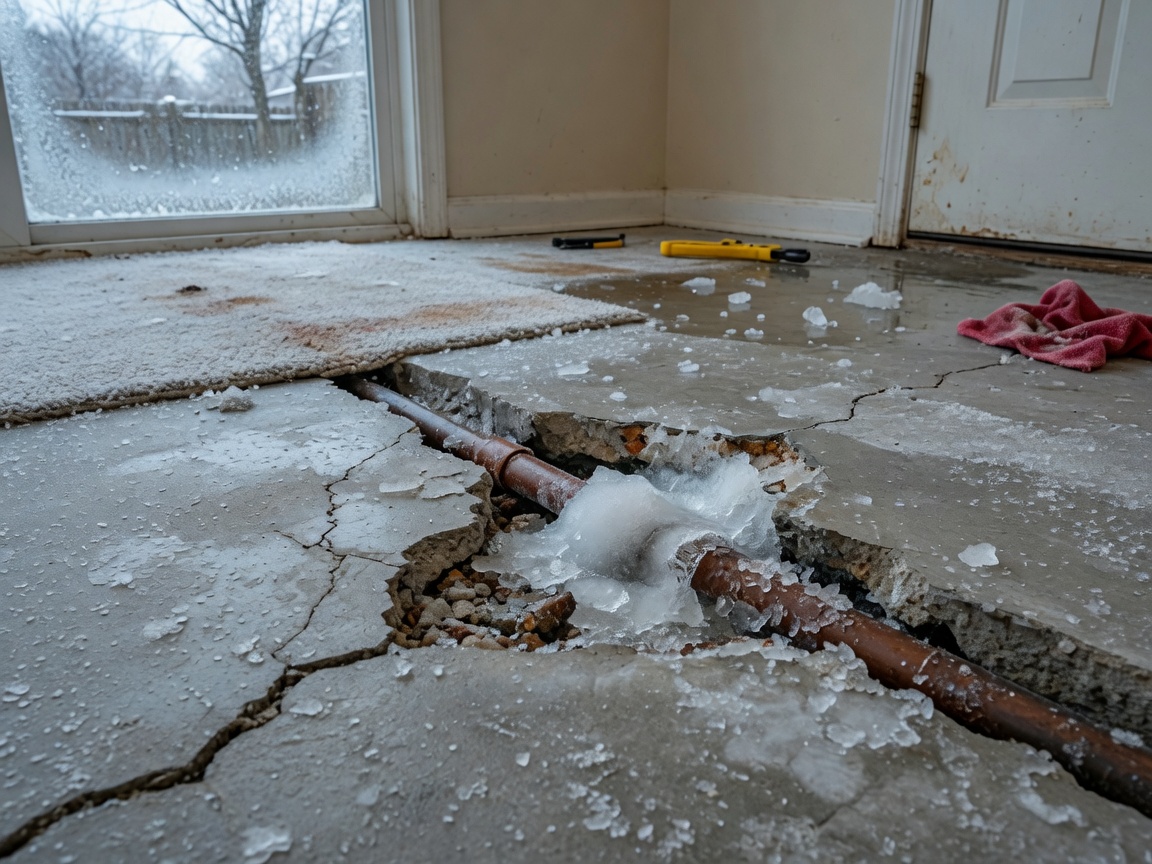
Winter freezes affect slab leaks in Fort Mill homes when overnight lows drop below 32°F, causing water in under-slab pipes to expand and crack copper or PEX lines installed in homes built from the 1980s onward across York County. This expansion often occurs at joints or bends where soil shifts slightly during the brief cold snaps that hit the region every few winters, allowing moisture to erode the slab base over weeks or months before visible signs appear.
Local Climate Patterns and Pipe Stress
Fort Mill's humid subtropical climate brings mild winters with only occasional dips below freezing, yet those short cold periods create targeted stress on underground lines. Homes in neighborhoods like Baxter Village and Springfield often sit on clay-heavy soils that retain moisture, so when a freeze hits, the combination of expanding ice and contracting soil can separate fittings on main water lines. Nearby Rock Hill and Charlotte see similar patterns, but Fort Mill's slightly higher elevation means frost can form on exposed ground more readily, pushing water pressure spikes through slab-embedded pipes. These events rarely last more than a night or two, yet the resulting micro-fractures allow slow seepage that undermines foundations over time.
How Freezes Damage Under-Slab Lines
When temperatures fall, water inside supply lines freezes and expands roughly nine percent in volume, exerting outward force on pipe walls that older galvanized or early copper installations cannot always withstand. In Fort Mill homes, this commonly affects lines running 12 to 18 inches beneath the slab where insulation is minimal. The pressure can split seams or loosen shark-bite connectors, creating pinhole leaks that go unnoticed until floors feel damp or utility bills rise. Soil movement from the freeze-thaw cycle in York County further aggravates these weak points, turning small cracks into active water paths that migrate toward the slab edge.
Detection Steps After a Freeze Event
After any cold snap, check for warm spots on tile or hardwood floors near bathrooms and kitchens, as escaping hot water from a compromised line raises surface temperatures. Listen for hissing sounds near baseboards and monitor the water meter for unexplained flow when all fixtures are off. Professional slab leak detection uses acoustic sensors and thermal imaging to locate the exact breach without unnecessary demolition. Residents in Springfield often combine this with a review of detecting slab leaks under Fort Mill foundations to understand how local soil conditions influence leak patterns.
Repair Considerations in Fort Mill Homes
Once located, repairs typically involve tunneling or epoxy lining rather than full slab removal, especially in Baxter Village properties where mature landscaping limits access. Water leak under slab repair crews isolate the damaged section, replace it with new PEX or copper rated for local pressure, then restore the concrete to match existing finishes. Post-repair, insulating exposed lines and adding pressure-reducing valves helps guard against the next rare freeze. Checking factors that influence slab leak repair costs in Fort Mill gives homeowners a realistic view of variables such as line depth and access points common in the area.