2026-10-24 · David Harlan
Detecting Slab Leaks Under Fort Mill Foundations
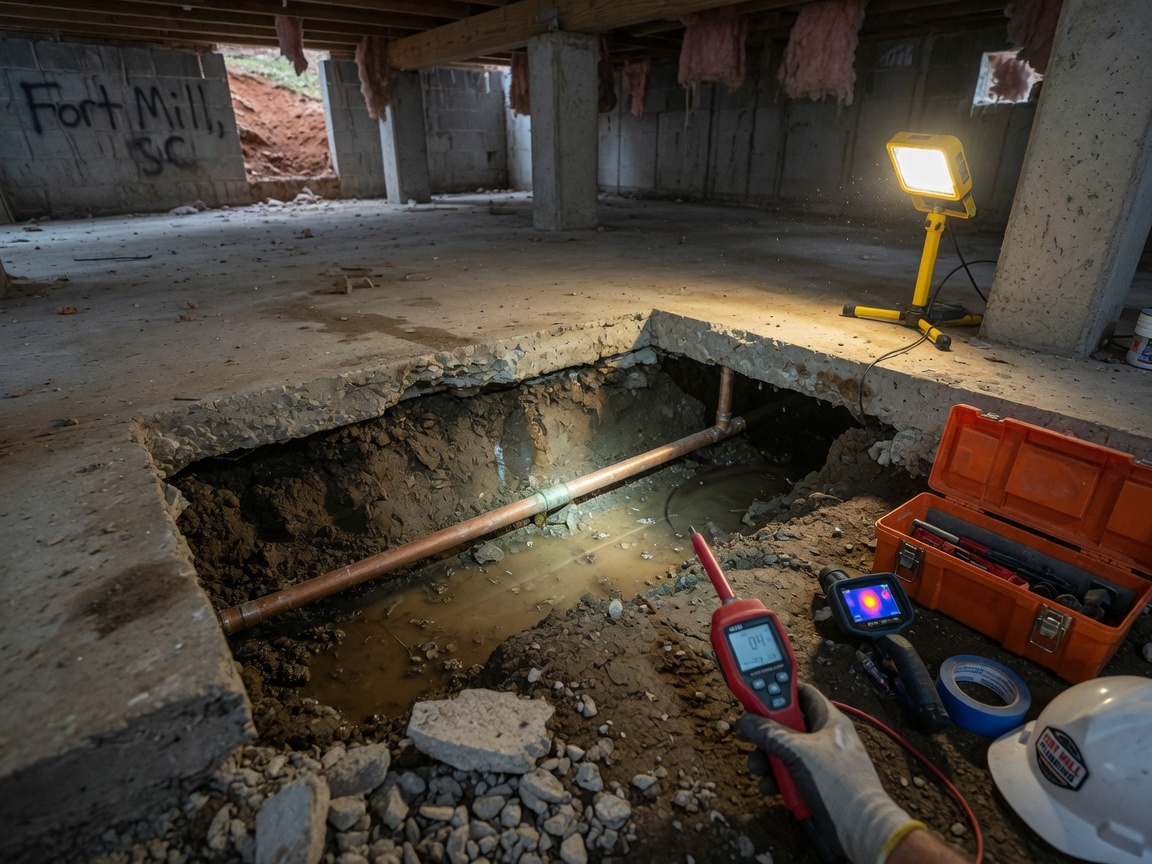
Detecting slab leaks under Fort Mill foundations begins with checking for unexplained warm spots on floors, sudden drops in water pressure, and water bills that jump without increased usage, especially in neighborhoods like Baxter Village and Springfield where many homes sit on concrete slabs over clay-heavy York County soil.
Visible and Audible Indicators in Local Homes
Homeowners in Fort Mill often notice damp carpet edges or musty odors near baseboards first because the mild winters and humid summers keep soil moisture high year-round. In Baxter Village properties built before 2005, settling can create hairline cracks that let water migrate under the slab. Listen for hissing sounds behind walls or under floors when the main line runs; these clues appear more frequently near the Anne Springs Close Greenway area where older underground lines cross shifting terrain. Rising utility costs of $50 or more per month without explanation usually point to a hidden leak rather than seasonal lawn watering. Check toilets and fixtures for constant running that never stops completely, as slab leaks often start from the same pipe sections feeding those areas.
Detection Methods That Work on Fort Mill Slabs
Start with a visual inspection of the foundation perimeter during dry spells, looking for cracks wider than 1/8 inch or pooling after light rain. Electronic listening devices pick up water flow under concrete when surface noise stays low, which works well in the quiet streets of Springfield. Thermal cameras reveal temperature differences of 5–10 degrees on flooring that indicate hot or cold water escaping beneath the slab. Pressure testing the system at 60–80 psi for 30 minutes shows drops that confirm leaks without excavation in most cases. Soil probes inserted around the foundation edge help locate wet zones in the clay common to York County, avoiding unnecessary cutting of finished floors in homes near the Fort Mill History Museum district.
How Local Weather and Terrain Affect Detection
The humid subtropical climate brings frequent afternoon thunderstorms that saturate the ground, making it harder to distinguish slab leaks from surface runoff in areas like Baxter Village. Mild winters rarely freeze pipes but allow small leaks to go unnoticed until they erode support soil under the slab. Charlotte’s urban expansion has increased water demand, which sometimes lowers pressure in Fort Mill lines and masks slow leaks until bills spike. Homes near Rock Hill experience more red clay expansion that shifts slabs seasonally, creating new leak points at joints. These patterns mean detection often requires checking during both wet and dry periods rather than relying on one visit.
Next Steps After Initial Checks
If basic checks point to a slab issue, schedule slab leak detection before damage spreads to flooring or cabinets. Review the related guide on how winter freezes affect slab leaks in Fort Mill homes for seasonal timing details. Homeowners in Springfield and Baxter Village can also compare findings with the article on factors that influence slab leak repair costs in Fort Mill to understand typical price ranges. Fort Mill Slab Leak Pros operates from 1244 Fort Mill Hwy Suite A, Indian Land, SC 29707 with hours Monday–Friday 8am–6pm and Saturday 9am–2pm for follow-up questions.