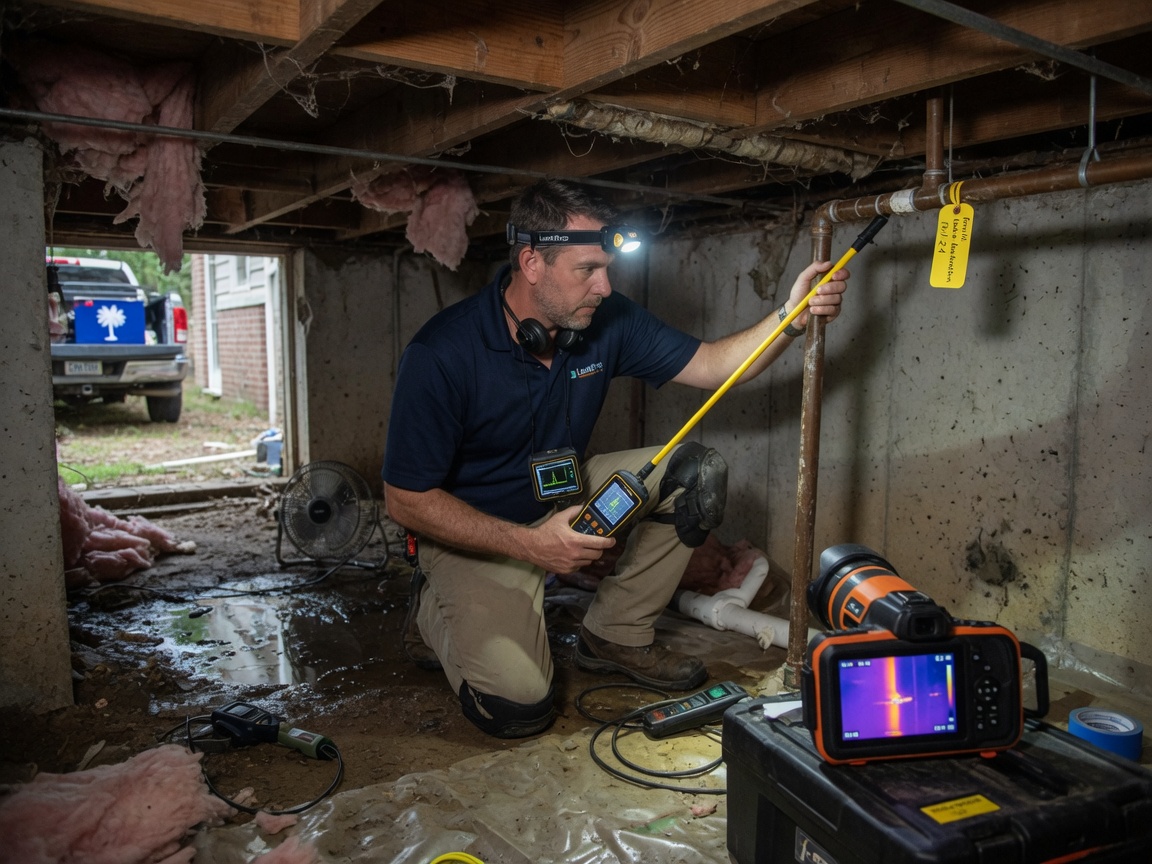
In Fort Mill's humid subtropical climate, mild winters keep soil moisture levels elevated year-round, which accelerates corrosion on older copper and galvanized lines under slab foundations common in Baxter Village and Springfield neighborhoods. Detection crews use acoustic sensors and pressure testing to isolate leaks before they migrate toward the Anne Springs Close Greenway watershed or affect neighboring properties in York County. Homeowners in these areas often notice warm spots on tile or unexplained spikes in water bills after heavy spring rains, when shifting clay soils stress pipe joints.
Charlotte's rapid growth has increased water demand on York County systems, raising average static pressure and making pinhole leaks more frequent in homes built before 1995. Technicians avoid invasive jackhammering by first mapping the slab layout from original permits and then confirming flow with inline meters placed at the Fort Mill Hwy meter box. This approach prevents unnecessary damage to finished basements that many Springfield residents added during the 2000s housing boom.
Thermal imaging works well here because the mild winters rarely produce ground freezes that mask temperature differentials, yet the constant humidity creates clear contrast when water evaporates from the slab surface. Crews also watch for secondary signs such as efflorescence on garage floors or musty odors near the Fort Mill History Museum vicinity, where older municipal lines feed many properties. Each job ends with a written map of the leak location and recommended access points that local plumbers can use for targeted repair.
Technician insight
In Fort Mill the thing that catches most people out with hidden water leak detection is the clay-heavy soil in Springfield that holds moisture against the slab all winter, so temperature differentials stay masked until we run a pressure test instead of relying on thermal alone.
Baxter Village Slab Moisture
Homeowner reported warm tile near the kitchen. Acoustic scan pointed to a line under the breakfast area. Pressure isolation confirmed a pinhole on the cold supply. We marked the spot and handed off to repair without opening the floor.
Hidden Water Leak Detection Services We Offer
✓Acoustic Leak Listening
Ground microphones isolate running water sounds through concrete in Baxter Village homes where slab depth varies.
✓Thermal Imaging Scans
Infrared cameras detect temperature changes from hidden moisture without excavation in Springfield properties.
✓Pressure Decay Testing
Monitored pressure drops confirm leak presence and approximate location before any floor removal.
✓Inline Flow Meter Placement
Temporary meters at the main shutoff track usage patterns to narrow leak zones in York County homes.
✓Video Camera Inspection
Small-diameter cameras enter supply lines to visually locate pinholes common near Rock Hill connections.
Hidden Water Leak Detection Cost in Fort Mill, SC
| Service | Typical Range | What Affects It |
|---|---|---|
| Basic Acoustic Scan | $175–$325 | Single-story homes in Baxter Village with clear slab access |
| Full Detection Package | $350–$650 | Thermal plus pressure testing in two-story Springfield homes |
| Emergency After-Hours Call | $125–$200 | Added to base detection when scheduled outside Mon–Fri 8-6 or Sat 9-2 |
Ranges are typical for Fort Mill, SC and confirmed with an exact written quote before any work starts.
How it works
- 1
Initial Assessment
Review water bill history and visible symptoms at the property in Fort Mill or Indian Land.
- 2
Non-Invasive Scanning
Deploy acoustic and thermal tools across the slab to identify the strongest signal area.
- 3
Confirmation Testing
Isolate sections with pressure tests and flow meters to verify the exact leak point.
- 4
Mapping and Report
Provide a diagram of the leak location and recommended access route for repair crews.
Pricing
Most hidden leak detection jobs fall between a quick scan and full multi-method confirmation depending on home size and access.